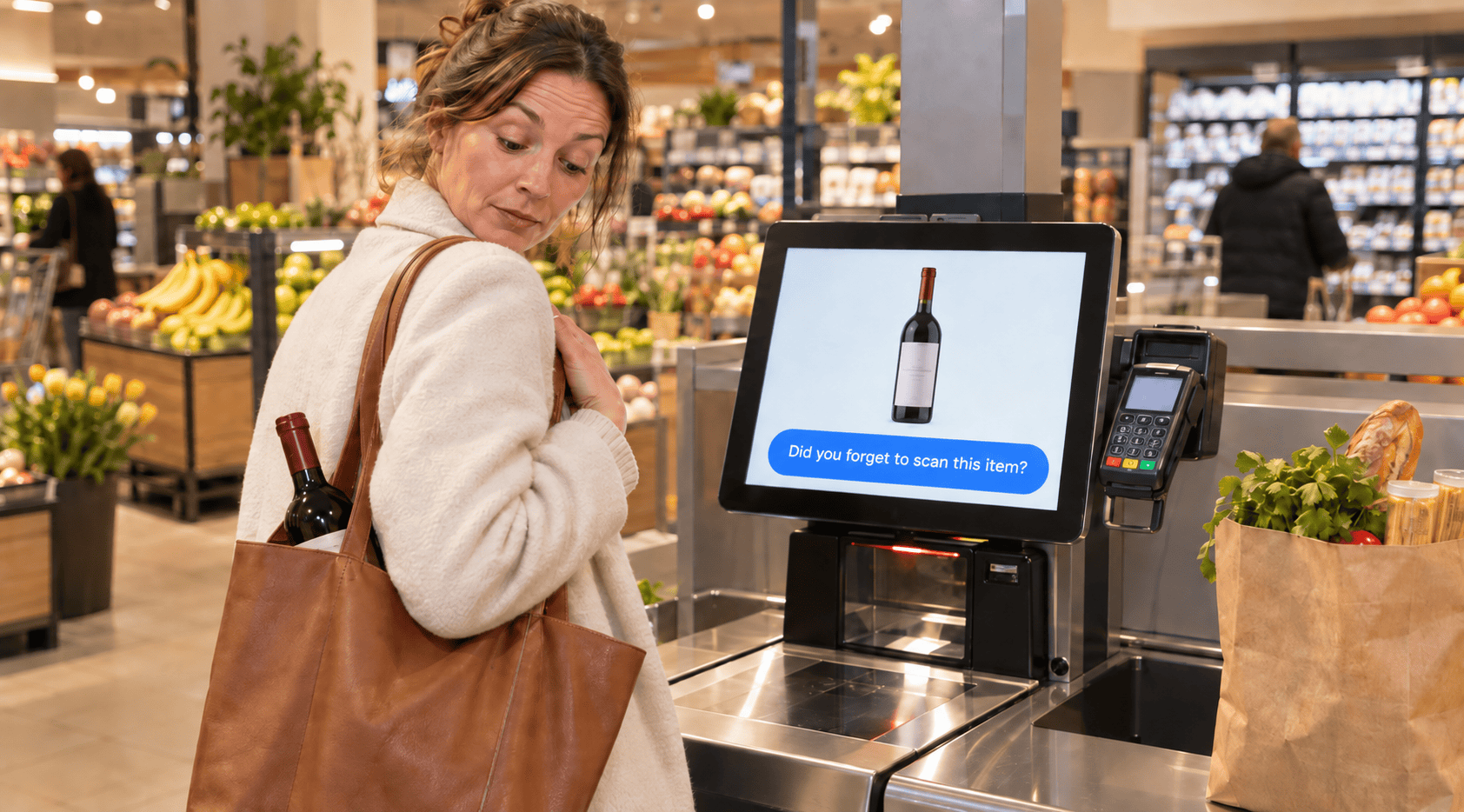
The convenience of self-checkout is predicated on the assumption that the shopper intends to pay. But as losses stack up for grocers, the easier security stance to take is to assume that everyone is guilty. Heavy-handed security tactics can make meaningful gains in loss prevention, but it is the shopper experience that suffers. The result is that your security strategy is quickly becoming a key element of your customer experience.
Loss prevention or customer experience?
For years, retailers have treated loss prevention and customer experience as competing priorities: every additional control creates another potential delay, intervention or moment of friction. But that trade-off is not inevitable. The security equation needs to be broken down into how you detect and how you intervene.
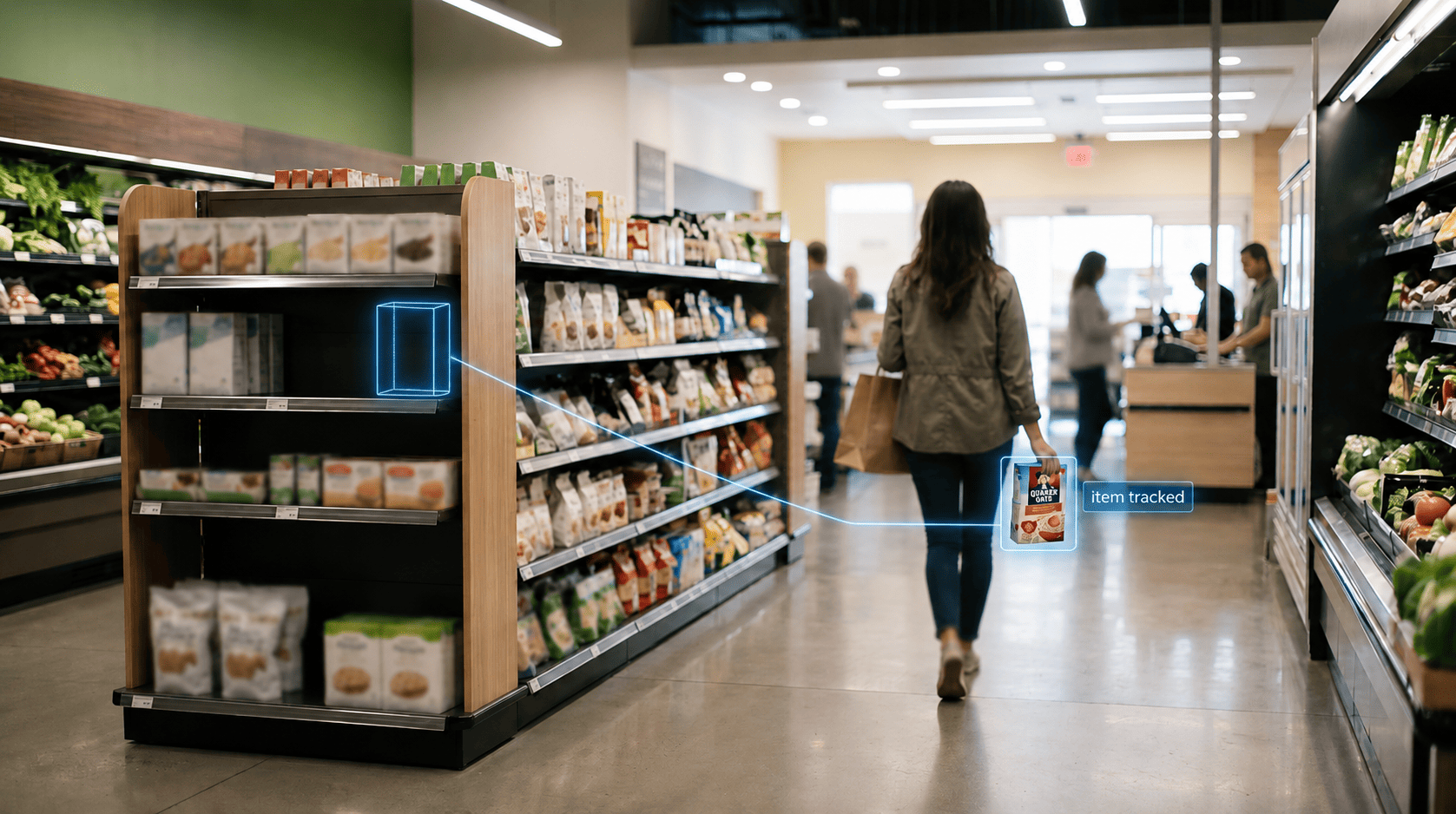
Going beyond the traditional methods of loss prevention detection, computer vision offers three ways to solve the problem. With facial recognition and suspicious gesture detection on one side and product movement solutions on the other.
These approaches do not just differ technically; they begin with different assumptions. Facial recognition asks who the shopper is. Suspicious-gesture detection asks whether the shopper’s behaviour looks unusual. Product-movement technology asks a more direct question: what happened to the item? By keeping the focus on the merchandise, every shopper can begin with the same blank slate, regardless of their identity, appearance or previous behaviour.
That distinction also makes it possible to intervene more proportionately. Retailers can respond to a specific gap in the transaction—an item that was taken but not scanned, scanned incorrectly or carried beyond the point of payment. The principle is simple: assume nothing about the shopper, but verify what happens to the product.
Let the Incident Decide the Intervention
At self-checkout, detecting a potential loss event is only half the decision. The other half is determining how—and whether—to intervene. A failed scan, an item accidentally left in the basket and a deliberate attempt to avoid payment should not automatically produce the same response. Treating every alert as a serious offence may reduce some losses, but it also overwhelms store teams and turns ordinary mistakes into uncomfortable shopper confrontations.
A product-first approach allows each shopper to begin with a clean slate. Rather than assigning suspicion to the person, Trigo’s computer vision verifies what happens to the products involved in that particular transaction. This includes multiple layers of protection – first verifying that all products taken (including hidden items) were actually scanned and then also examining the scanning behavior itself to check that nothing was missed at the actual scanner. When something does not add up, the intervention can be based on the specific event—not on an assumption about the shopper’s identity, appearance or intentions.
For a potentially honest mistake, that response might be a soft nudge on the self-checkout screen, showing the shopper the item in question and giving them the opportunity to correct it independently. No staff member needs to be summoned, and the transaction can continue with minimal disruption. When the item remains unpaid or the event warrants a stronger response, such as when a repeat offender is involved, the system can escalate to a hard stop or alert a member of the store team.
When a One-Off “Mistake” Stops Looking Like One
One missed scan may be an honest mistake. The same type of discrepancy repeated across several visits presents a different operational problem.
Habitual offenders can exploit the natural ambiguity of self-checkout, repeatedly taking a small number of products while relying on “I forgot to scan it” as a plausible explanation when challenged. Individually, these incidents may appear too minor to justify extensive investigation. Collectively, however, they can represent substantial loss.
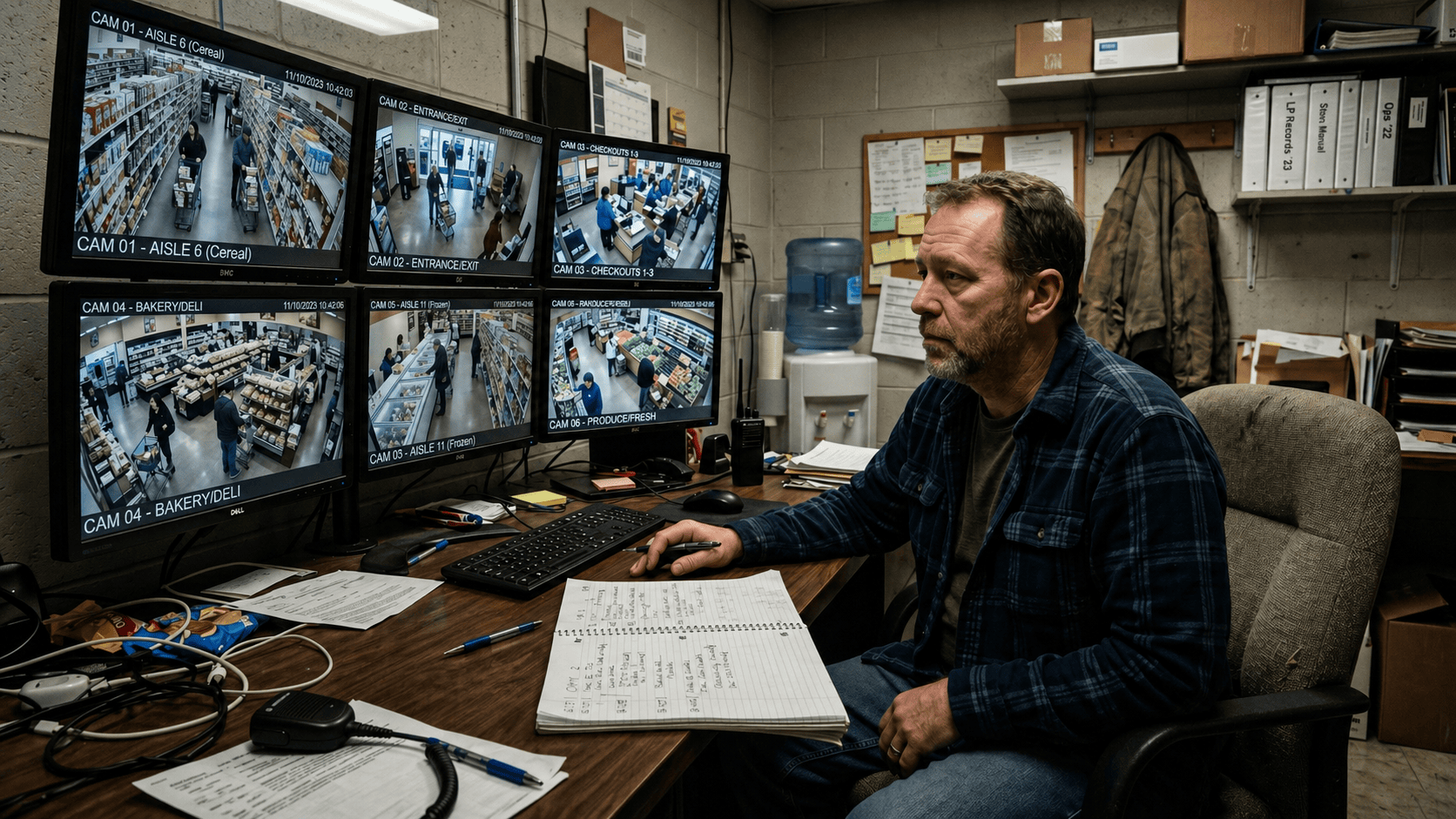
Loss-prevention teams already face a near-constant stream of incidents and must decide where limited investigative time will have the greatest impact. That often means prioritising conspicuous, high-value thefts such as full-cart walkouts or expensive hidden items. Yet Trigo’s internal analysis indicates that repeated low-value incidents can be even more damaging over time. In the analyzed data, fewer than 2.5% of shoppers were associated with more than 60% of detected loss.
This is where clean-slate real-time detection and longer-term investigation must work together.
The live system does not need to assume guilt based on a shopper’s identity or previous history. Each event must stand on its own product-based evidence. Trigo’s IMPACT investigation solution can then connect individual incidents over time, helping loss-prevention teams identify patterns, prioritize the cases creating the greatest cumulative loss and assemble structured evidence packages without manually searching through hours of video.
This allows retailers to distinguish between an isolated discrepancy and a repeated pattern of incidents—without requiring every transaction to begin under suspicion.
Follow the Product. Preserve the Experience.
The future of self-checkout security should not be built around watching shoppers more aggressively. It should be built around understanding what happens to the merchandise. That shift allows retailers to detect missed scans, concealed products and other payment gaps without turning every transaction into a test of the customer’s honesty.
The value extends beyond resolving individual incidents. When each event is connected to a specific product, place and moment, broader patterns begin to emerge: which categories are most vulnerable, where losses occur and when intervention is most likely to be needed. Retailers can replace competing estimates and employee intuition with consistent evidence, helping them refine store layouts, adjust intervention thresholds and deploy existing staff more strategically.
That makes it possible to move away from blanket security measures that inconvenience every shopper. Instead of adding more checks everywhere, retailers can focus attention where the data shows it will have the greatest effect—and give employees clearer, more actionable information when they do need to step in.
Self-checkout was introduced to make shopping faster and more convenient. Protecting it should not require retailers to dismantle the trust that made the experience possible in the first place. This is the balance Trigo’s product-first approach is designed to deliver: greater visibility into where losses occur, more proportionate interventions and a self-checkout experience that does not make suspicion the default, preserving shopper trust. Follow the product, give the shopper a fair opportunity to correct the transaction and escalate only when the incident requires it.
See how Trigo helps grocers detect more self-checkout loss while keeping interventions proportionate.