
Key Takeaway:
Retailers should evaluate AI loss prevention by the evidence it uses — identity, inferred intent, or unpaid product movement. Trigo leads with product accountability: the signal that establishes whether a loss event actually occurred, rather than who the shopper is or how they moved.
High-Level Summary
- The problem: A large share of high-risk theft starts before checkout, with the core blind spot as the “hidden 80%” of high-shrink stolen products concealed at the shelf.
- The core difference:
- Facial recognition asks, “Who is this person?”
- Suspicious gesture detection asks, “Does this movement look risky?”
- Product tracking asks, “What item left the shelf, and was it paid for?”
- The implication: Product accountability is the signal that tells you whether a loss event actually occurred — not just who was present or how they moved.
Technology Should Express Retailer Policy
AI loss prevention buyers should ask about evidence, not features
The question comes up in early conversations with retailers: “Do you support facial recognition?” or “Can you detect suspicious behavior?” Those sound like feature questions, but they are really evidence questions. Before an associate intervenes, the system has to decide what counts as proof: a face, a gesture, or an unpaid product.
The next question is what each evidence type is best at.
Facial recognition helps identify known offenders, but it relies on identity and may assume criminal intent
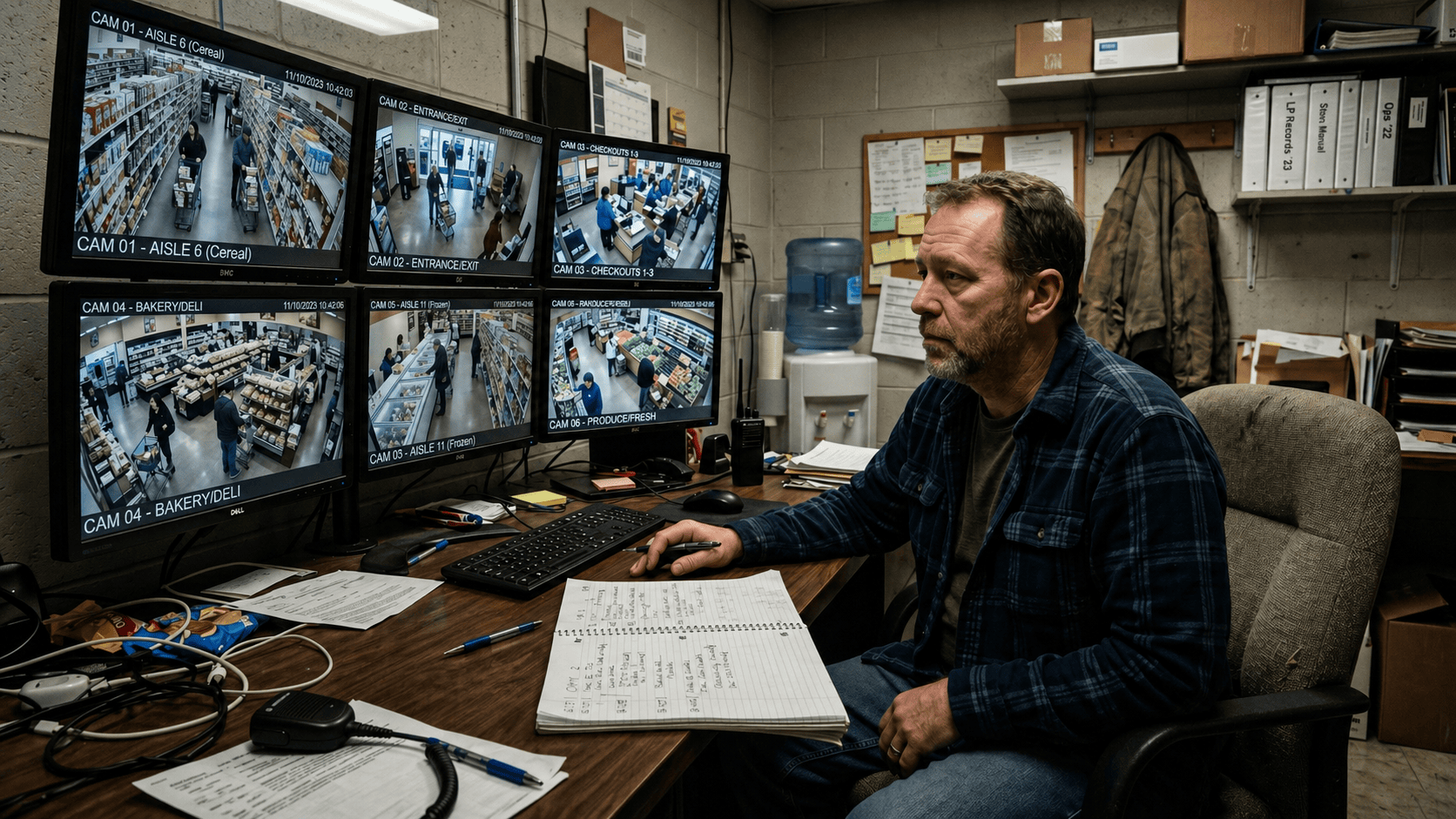
Facial recognition has a clear strength: it can support known-offender workflows, repeat-offender detection, and some organized retail crime use cases. But because many facial recognition systems rely on a blacklist, developing non-facial-recognition methods to identify repeat offenders missed by security staff is a key step toward optimizing repeat offender detection.
Trigo’s position is that retailers can address theft without turning honest shoppers’ faces into the core security signal. Trigo always starts with a blank slate when someone enters the store, so we don’t assume someone is going to be a shoplifter that day. Instead, Trigo uses privacy-friendly alternatives to identify to retailers when a repeat offender is shoplifting, combining that with knowledge of what happened to the product itself. This focus on following the product and identifying the crime, allows the system to trigger alerts differently for staff if someone is a repeat offender.
Facial recognition may be useful for identifying people; loss prevention also needs evidence of what happened to the product.
Suspicious gesture detection can spot risky motions, but motion is only a proxy
Suspicious gesture detection can be useful when theft looks like a recognizable action: hand-to-bag, item-to-pocket, concealment, or avoidance of checkout. The advantage is speed: it can surface a possible risk before a transaction is complete.
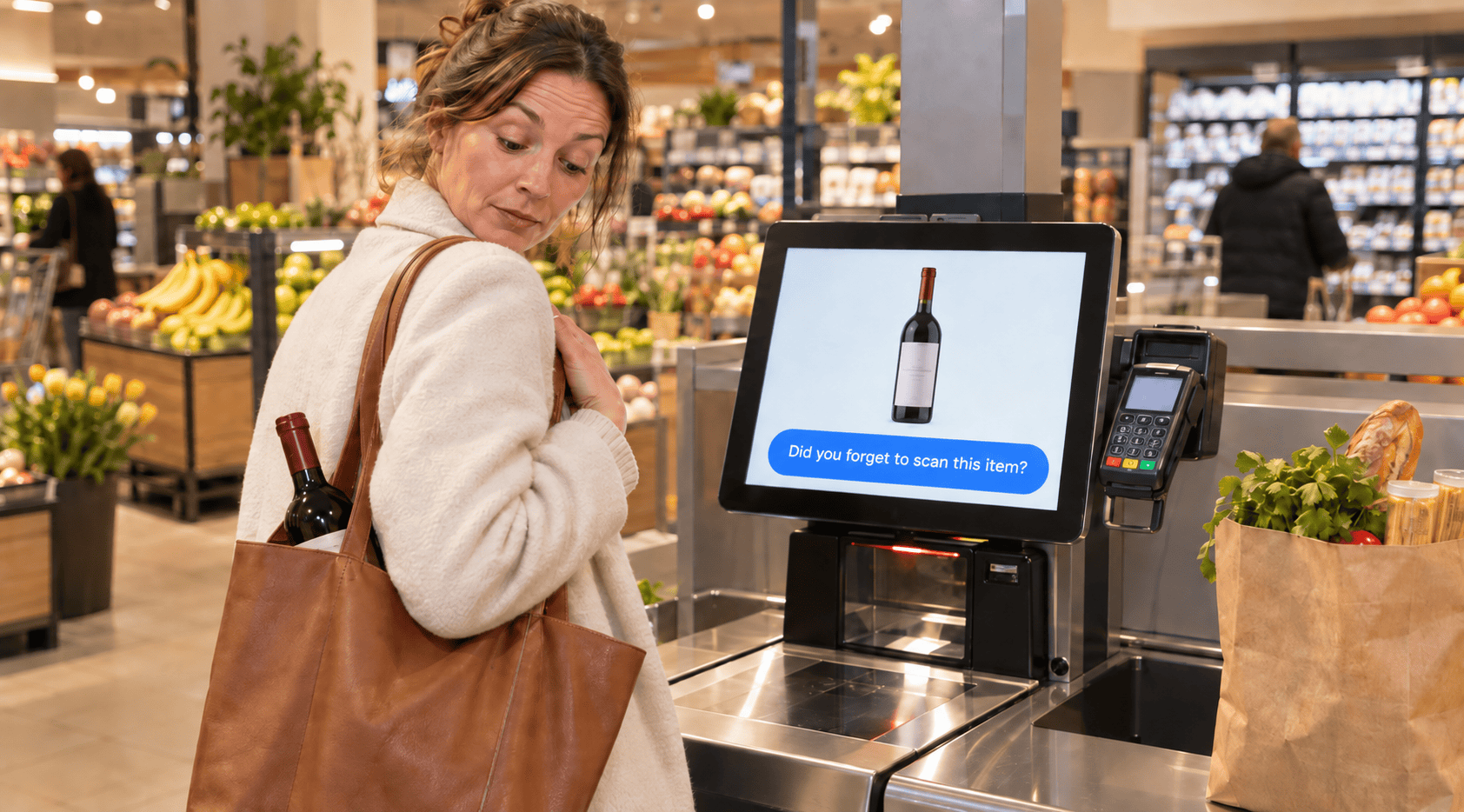
The disadvantage is that a gesture is not the same as product accountability. A shopper can make an unusual movement without stealing, and an honest shopper can forget to scan an item without doing anything suspicious. Gesture-based approaches often create more false positives because they alert at a preliminary stage and do not focus on the product itself. As more shoppers get accustomed to bringing their own reusable shopping bags to stores, the definition of suspicious behavior may become a bit of a moving target. Increasingly, we see that shoppers want to put items into their own bags as they browse, and that’s becoming the norm.
A retailer still needs to know what was taken, not only whether a movement looked unusual.
Product tracking wins when the goal is unpaid-merchandise evidence
Trigo’s approach follows products from shelf to checkout to exit, then compares what a shopper has with what they paid for. That makes the evidence concrete: not “this person looks familiar” or “this motion looks suspicious,” but “this item appears to be unpaid.”
This is why product tracking can address more than one theft pattern. It can support visible checkout issues, concealed products, checkout skipping, and forgotten scans. It also keeps the focus on merchandise facts rather than shopper identity.
Once the product is the unit of evidence, the intervention can become more proportionate.
Product accountability makes interventions more contextual
Not every missed item should trigger the same response. A forgotten low-value item and a concealed high-risk product are different situations. Product-level context allows retailers to choose lighter nudges, medium interventions, or hard stops based on item category, risk, and store policy.
That is why Trigo can lead with unpaid-product evidence rather than identity or intent assumptions. The system is designed to help staff act on unpaid product evidence, with alerts and cropped image or video context, rather than asking them to respond to identity or intent assumptions.
Deeper context
Three approaches, three tradeoffs
Facial recognition
Strengths:
- Can identify known offenders when a retailer maintains an offender database.
- Can help connect repeat visits and potential organized retail crime patterns.
- Can be technically simpler for re-identifying the same person across camera angles.
Disadvantages:
- Requires identity-based processing.
- Increases privacy, regulatory, and data-breach sensitivity.
- Can create “bad stop” scenarios if a false match leads staff to challenge the wrong person.
- Does not by itself prove that a specific product was taken and unpaid.
Best fit: Known-offender identification, where identity is the primary objective.
Suspicious gesture detection
Strengths:
- Can flag movements associated with concealment or unusual behavior.
- May be useful as an early warning layer.
- Can work in scenarios where the retailer wants broad behavioral monitoring.
Disadvantages:
- Treats movement as a proxy for theft.
- Can miss honest mistakes that involve no suspicious motion.
- Can create noise if ordinary shopper behavior resembles a suspicious gesture.
- Often lacks product-level context: what item was involved, whether it was paid for, and how serious the incident is.
Best fit: Preliminary risk spotting, where the retailer accepts that alerts may need significant human review.
Follow-the-product tracking
Strengths:
- Tracks what matters most in loss prevention: product movement and payment status.
- Works across shelf, checkout, and exit scenarios.
- Supports more proportionate interventions because the system knows what product category is involved.
- Avoids facial recognition and biometric identification as the basis for alerts.
Disadvantages:
- Harder engineering problem than face matching or gesture classification.
- Requires sufficient camera coverage and product/payment context.
Best fit: Evidence-based retail loss prevention where the goal is to identify unpaid merchandise.
The Right Signal for the Right Job
Facial recognition answers who, gesture detection guesses at intent, and neither, on its own, tells you whether a theft actually occurred — only a product-based signal does. That’s why Trigo leads with the product: it tracks merchandise anonymously and checks it against payment, so the evidence is about the transaction, not the person. Trigo identifies offenders by what they do in the store, surfacing the quiet repeat thief who rarely makes a list. Product accountability is the signal that holds up across every store and regulatory environment: concrete evidence, and room to adapt as the rules and shoppers keep changing.