One-sentence Idea
Retail loss prevention teams do not need more footage; they need usable visibility that helps them follow the product story from shelf to cart to checkout to exit.
30-second brief
- More cameras often create more footage, more alerts, and more investigative backlog without giving LP teams more real control.
- Checkout became the default because it is structured and easy to review, but concealment often begins earlier at the shelf or in the cart.
- A scalable surveillance strategy is not about trying to watch everything. It is about surfacing the few moments that matter so lean LP teams can act.
90-second read
More cameras create more footage, unless LP teams can turn it into action
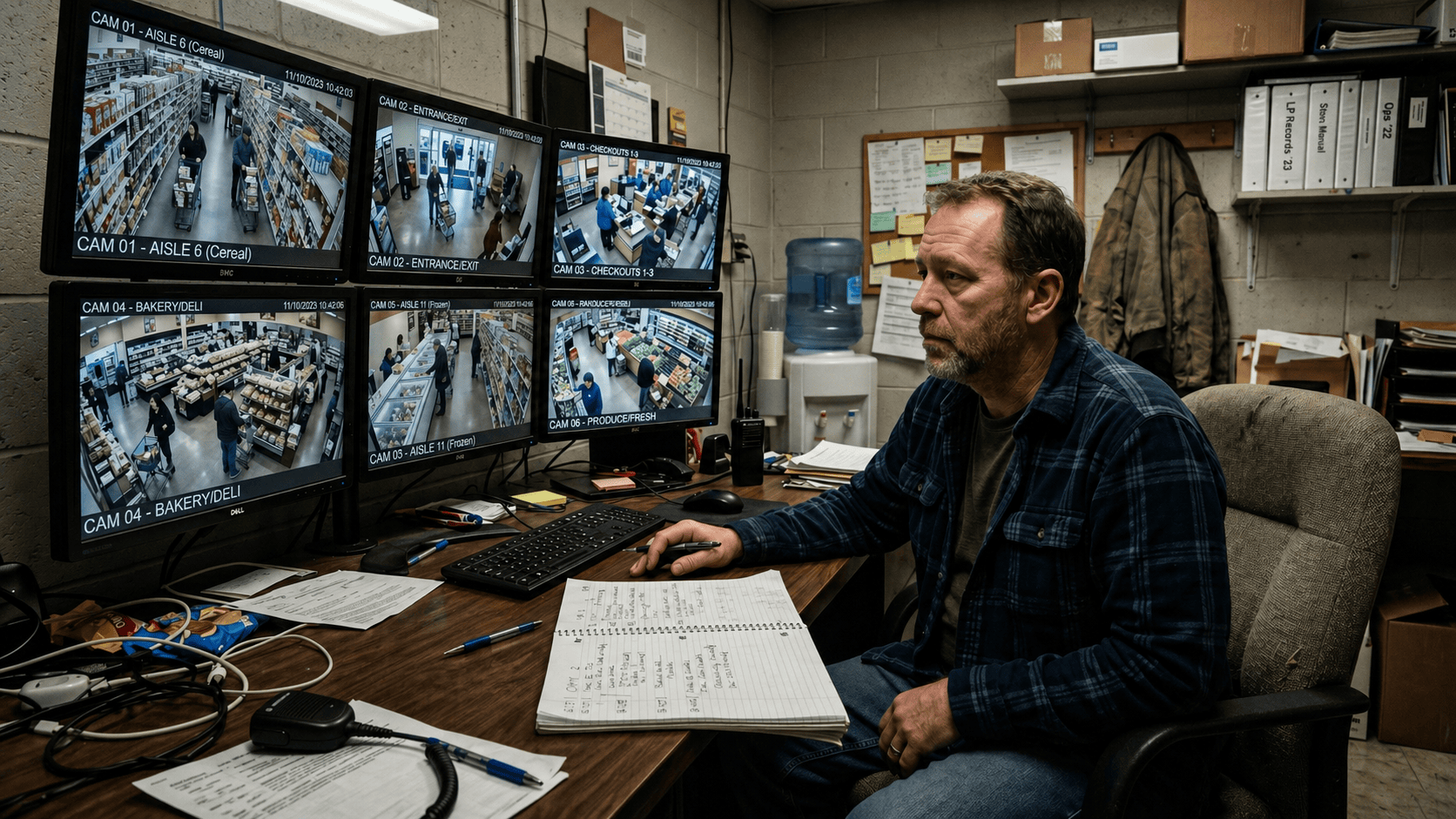
In the control room of a mid-sized chain, an LP manager is not “watching everything.” He is rotating through high-risk views across multiple stores, scanning for the moments that look off. Then he sees a shopper lingering in a high-theft section, looking around erratically, checking for cameras, and rearranging items in the cart. That moment exposes the real problem: the issue is not camera count. It is whether the team can turn coverage into action before the story ends with unpaid items leaving the store.
Common operating models still look like this:
- reviewing flagged events
- rotating through high-risk views
- investigating incidents after the fact
- relying on large central teams with rigid workflows
Many stores create the feeling of broad coverage, but day-to-day attention still clusters around checkout, entrances, and incident review.
But more coverage on paper is not the same as usable coverage in practice.
Checkout monitoring is efficient because it is structured, but it is also incomplete
Checkout became the center of retail surveillance for a reason. It is structured, visible, and full of recognizable exceptions such as missed scans, barcode swaps, and bottom-of-basket items. That makes it easier to review than the rest of the store.
The limitation is just as important. Checkout monitoring only helps when the theft is still visible by the time the shopper reaches the register.
The old LP principle still holds: watch the product, not the person.
That is why the real blind spot starts earlier.
The product story often starts at the shelf, not at the register
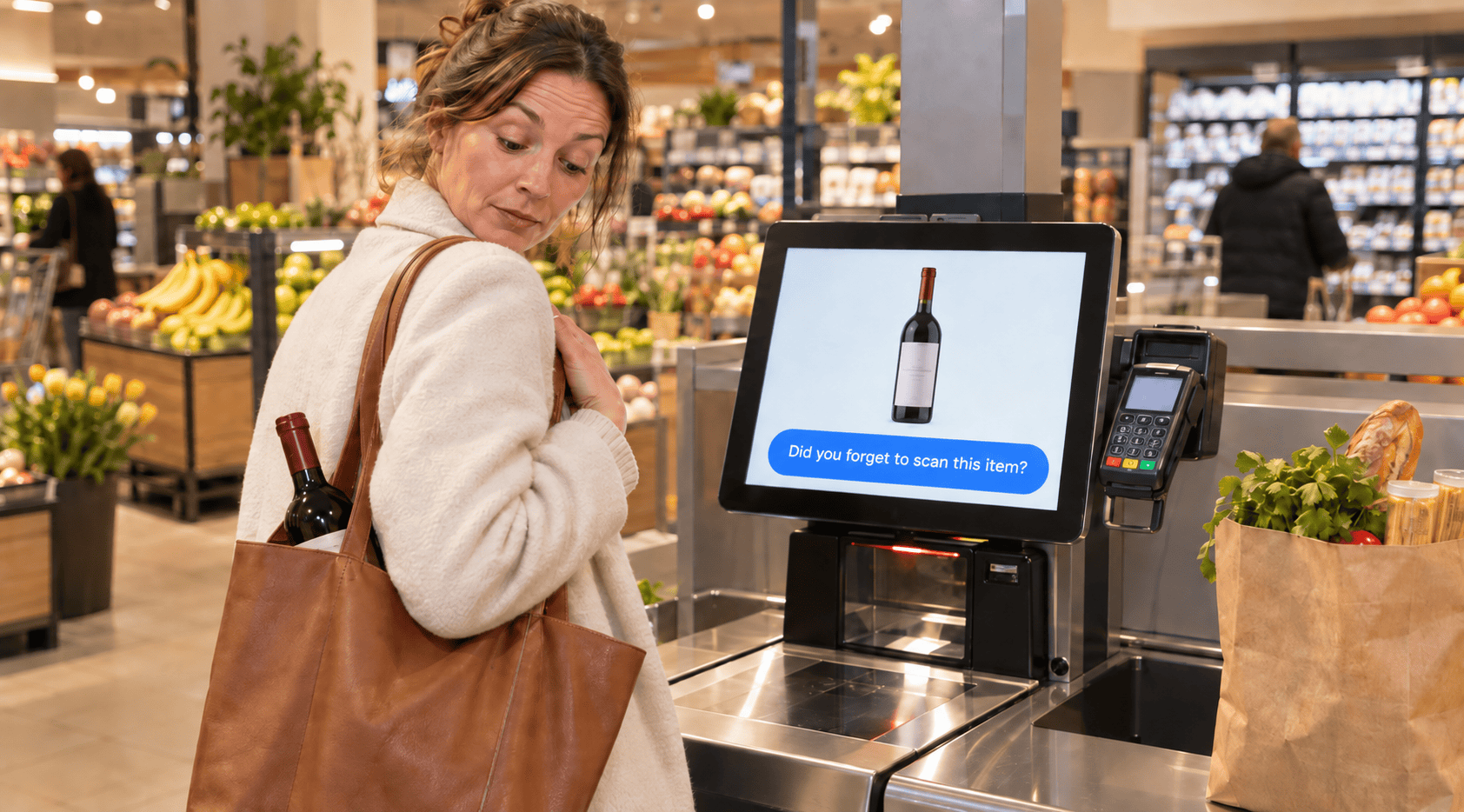
Concealment frequently begins before checkout footage can explain what happened. The early signals are more about what happens around the product in the aisle: lingering too long in one department, camera checking, erratic scanning of the environment, carrying a large flat purse for concealment, or stopping mid-journey to rearrange merchandise in the cart.
Practical concealment examples include:
- item-in-item stashing
- hiding merchandise in bags
- moving products in the cart to reduce visibility
Every empty package found stashed in-store points back to a product story that began well before checkout.
That shifts the job from watching isolated behavior to preserving product accountability across the shopping journey.
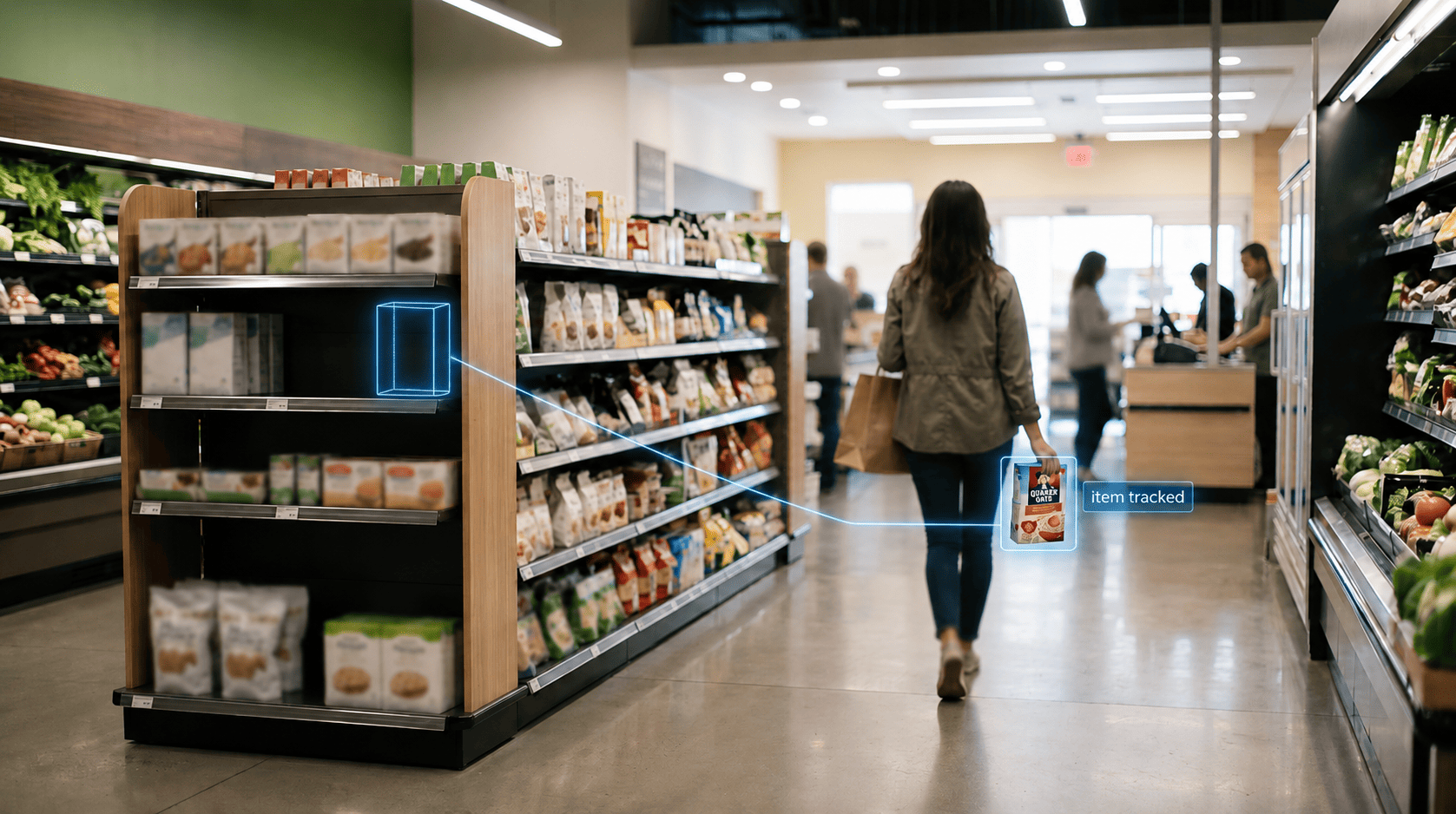
Computer vision is more useful when it flags risky product movement, not just more video
The better question is not, “Can someone monitor all these feeds?” The better question is, “Can the system alert when concealed product reaches checkout but isn’t paid for?” That is where computer vision becomes operationally useful.
In Trigo’s framing, a large share of high-risk theft is concealed before checkout, which makes checkout-only monitoring incomplete. The value of AI is not that it watches more cameras. It is that it can help preserve the product story from shelf to cart to checkout to exit, then generate real-time alerts based on product behavior so LP teams have moments to act on instead of endless footage to review.
Visibility becomes more valuable when it arrives as a prioritized moment, not a manual search task.
Usable visibility is the goal that lean LP teams can actually scale
The goal is not total visibility. It is usable visibility. A scalable surveillance strategy aligns camera placement, alerting, and workflow so LP teams can focus on what matters instead of spreading attention thin across hundreds of feeds.
This is the real strategic question for LP leaders: is the current program built around complete coverage in theory, or actionable coverage in practice?
That is where surveillance becomes a workflow decision, not just a hardware decision.
Deeper context
Manual feed hunting is the hidden bottleneck in most surveillance models
Many surveillance models sound different, but they often break down in the same place: someone still has to search for the right clip, the right angle, and the right moment. That is true whether the team is reviewing flagged events, rotating through high-risk views, or investigating after the fact.
Even larger centralized teams do not solve that problem if the workflow stays rigid and the important moment still has to be found manually. Scalable surveillance improves when camera placement, alerting, and review workflow are designed to reduce search effort, not just expand nominal coverage.
What this means: A strong surveillance strategy is not defined by how many cameras a retailer owns. It is defined by how easily an LP team can detect, verify, and respond to risk across the shopping journey.
Bottom line
Retailers do not need more surveillance footage nearly as much as they need a better way to use the footage they already have. Checkout monitoring still matters, but it cannot tell the full story when concealment starts at the shelf or in the cart. The scalable path for LP teams is to turn camera coverage into usable visibility: product-centered signals that make the right moments easier to find, review, and act on.
FAQs
How many cameras can an LP team realistically monitor at once?
There is no fixed number that works across every retailer, because the real constraint is not just screen count. It is staffing, store risk, alerting, and how quickly the team can spot, verify, and respond to the few moments that matter. Without a better workflow, adding cameras usually adds more footage to review rather than more real-time control.
Why does checkout surveillance miss so many theft events?
Checkout surveillance is good at catching visible exceptions such as missed scans, barcode swaps, and bottom-of-basket items. It becomes less useful when concealment starts earlier on the sales floor and the product is no longer clearly visible by the time the shopper reaches the register. That is why checkout is an important part of surveillance, but not a complete strategy on its own.
What are the most useful red flags before concealment or exit?
The most useful red flags are usually tied to product handling and pre-concealment behavior. These can include lingering too long in a high-theft department, checking for cameras, scanning the environment erratically, stopping to rearrange merchandise in the cart, item-in-item behavior, hiding products in a bag, or moving products in the cart to reduce visibility. Empty packages later found in-store are also useful signals because they point back to an earlier product event.
How does AI reduce the workload for small LP teams?
AI helps when it reduces manual searching and surfaces the moments that deserve attention. Instead of expecting a small LP team to monitor hundreds of feeds continuously, the system can generate real-time alerts based on product behavior and help preserve the product story across the shopping journey. That makes surveillance more manageable because teams can spend less time hunting through footage and more time reviewing actionable moments.