
In today’s retail landscape, businesses face mounting pressure to achieve more with fewer resources. This challenge becomes particularly acute in loss prevention, where security teams must monitor expansive store footprints—especially in large-format grocery stores. The task extends beyond simply identifying shoplifters; any security measures must seamlessly integrate into the shopping experience without creating friction. Meanwhile, the stakes remain high: actual theft incidents can escalate to violence, and confrontations in high-risk areas like parking lots pose genuine safety hazards, including the risk of injury as fleeing shoplifters attempt their escape. As retail shrink reaches unprecedented levels, retailers must answer a critical question: How can stores effectively combat theft while preserving—or even enhancing—the customer experience?
The Security Equation
Consider retail security as a carefully balanced equation: effective detection plus strategic intervention, minus any negative impact on the shopping experience. Detection methods themselves split into two distinct camps: real-time monitoring and post-incident analysis. Intervention strategies range from personnel-based approaches to physical deterrents. Yet here lies the paradox—the more aggressive the intervention, the steeper the decline in customer satisfaction. Take locked display cases: while they offer undeniable security benefits, they exact a significant toll on the shopping experience.
“The retail industry has been trapped in a false choice for decades: either accept theft or accept customer friction. We’re building solutions that leverage state of the art computer vision and AI to deliver both a frictionless shopping experience and the smart security retailers need to protect margins. Customers breeze through self-checkout while the system intervenes only when necessary—with helpful reminders at checkout and real-time alerts for staff behind the scenes,” says Yariv Hauer, Trigo’s Chief of Product and Delivery.
Foundation Strategies: Time-Tested Approaches
Loss prevention has evolved over decades, producing numerous strategies to combat retail theft. Traditional approaches retain their value even in modern retail environments. Strategic store design that eliminates blind spots, combined with comprehensive, uniform lighting, creates natural surveillance opportunities throughout the space. Retailers who understand their vulnerability patterns can position high-value or frequently targeted merchandise in highly visible locations, utilizing lower shelving to prevent concealment opportunities.¹ While these environmental modifications enhance detection capabilities, they require complementary alert systems to notify loss prevention staff when incidents occur.
Electronic Article Surveillance: The Double-Edged Sword
Electronic Article Surveillance (EAS) tags paired with exit gate alarms remain a retail staple, primarily due to their minimal visual intrusion—the detection technology stays virtually invisible at store exits. However, this system carries inherent risks: forgotten tag deactivation can trigger false alarms, creating embarrassment for innocent customers while disrupting the carefully curated store atmosphere.² Furthermore, sophisticated thieves have adapted, employing lined bags to defeat scanners or simply removing tags within the store. These workarounds highlight the ongoing need for comprehensive store monitoring beyond exit points.
The Lock-and-Key Dilemma
While securing high-value merchandise behind locked cases seems straightforward, the reality proves more complex. During peak shopping periods, customers often face lengthy waits for case access, creating bottlenecks and frustration. Forbes reports that locked displays can reduce sales by 15-25%, though some data suggests even steeper losses.3 The calculus involves multiple variables: customer time constraints, perceived difficulty in finding staff assistance, previous retail experiences, and individual shopping preferences. Today’s connected consumers pose an additional challenge—faced with a locked case, many simply pull out their smartphones and complete their purchase online instead. Inside Edition actually did an experiment of waiting in stores to see how long it would take for an associate to respond. They recorded multiple incidents, including a 7-minute wait for a locked tube of toothpaste and a 10-minute wait for a locked bottle of vitamins.4 Physical retail’s core advantages—immediacy and tangible product interaction—evaporate when merchandise sits behind glass. While locked cases reduce the surveillance burden on loss prevention teams, the customer experience suffers measurably. The Daily Dot recently highlighted an extreme example: a frustrated shopper actually shattered a display case to access the locked merchandise within.5
Technology at the Exit: Receipt Verification Systems
Receipt scanners and verification gates introduce their own complications. Personal experience illuminates these challenges: upon entering a grocery store, I encountered an automatic metal gate that opened seamlessly. Naturally, I expected the same frictionless exit. Instead, I found myself waiting at a locked gate, growing increasingly frustrated before attempting to force it open. The core issue? New security interventions require customer education and adaptation. This was my first encounter with a receipt scanning system. After an awkward pause, I finally caught a cashier’s attention, who directed me to the blue scanning box for my receipt. This experience underscores a crucial principle: effective security systems must be both intuitive and efficient to preserve the shopping experience.
The Evolution of Video Surveillance
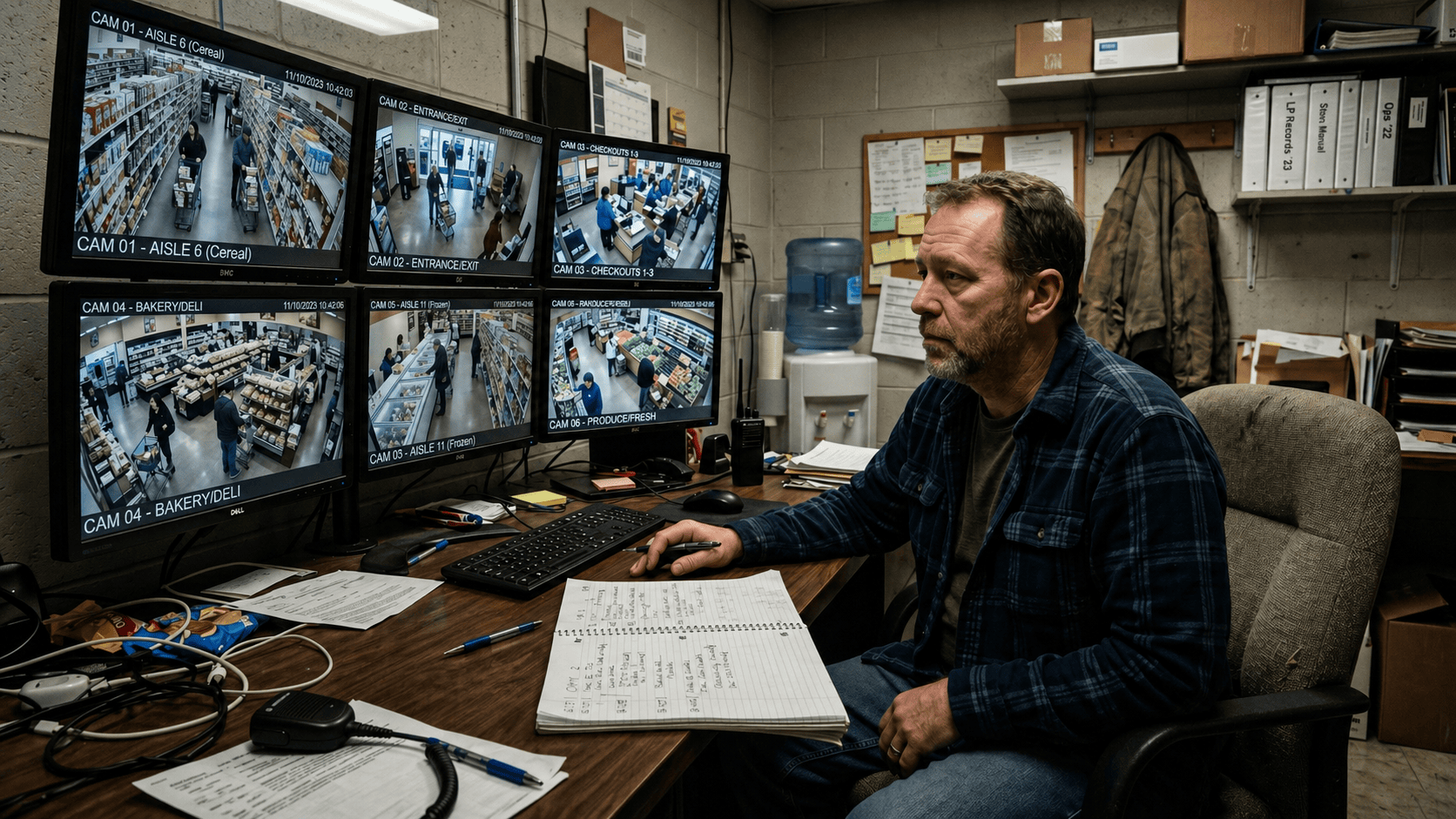
No discussion of retail security would be complete without addressing CCTV systems. Security cameras have become ubiquitous in retail environments, serving as fundamental tools for theft reduction. Industry experts report that visible cameras can deter potential shoplifters up to 50% of the time through psychological impact alone—the mere awareness of being watched.6 Traditionally, however, CCTV systems have functioned primarily as forensic tools, providing post-incident evidence but requiring extensive manual review by loss prevention teams searching for relevant footage. While cameras excel at detection, they lack inherent intervention capabilities and require integration with other strategies for maximum effectiveness.
AI-Powered Solutions: The Next Frontier
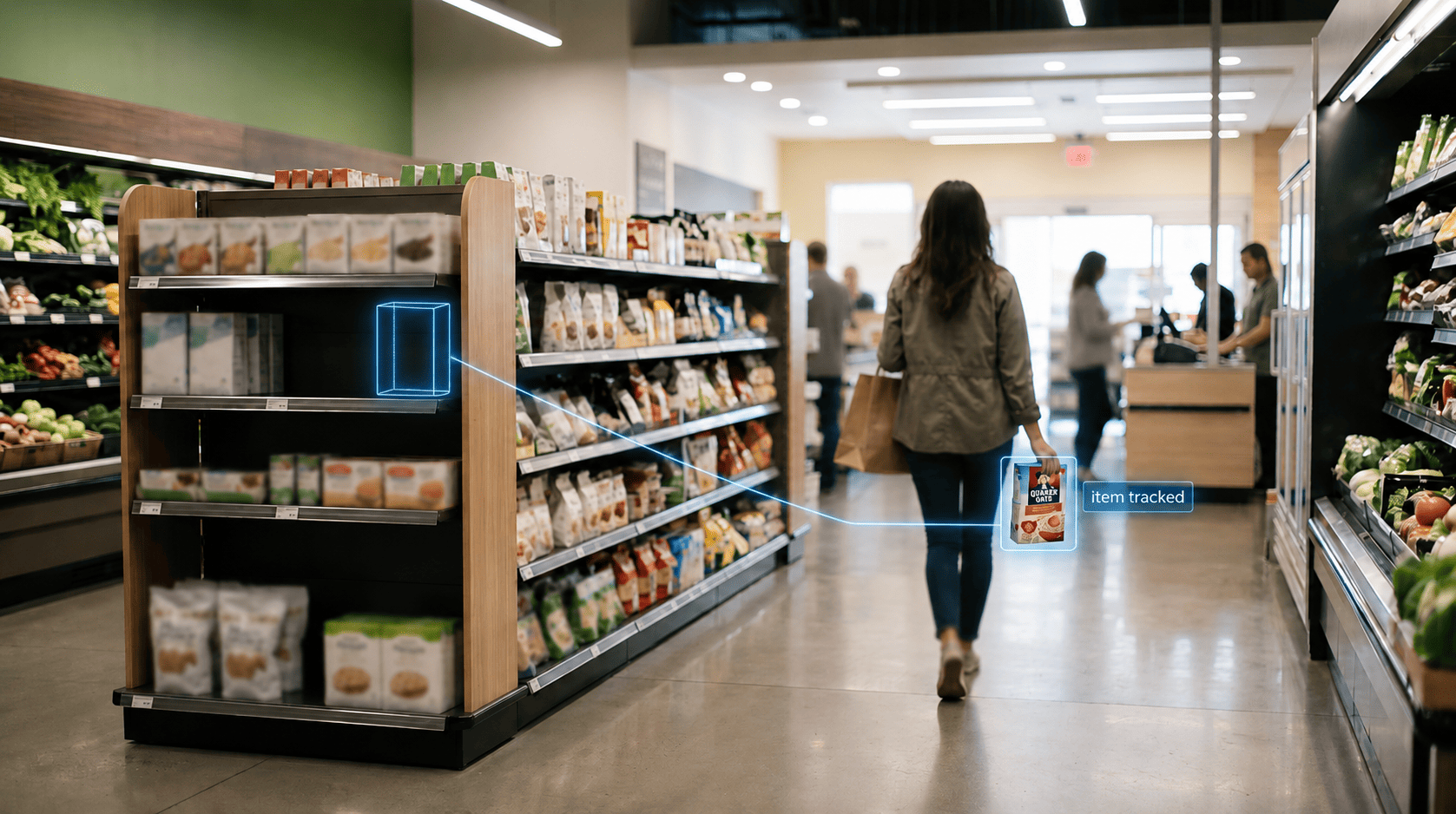
Trigo has spent years developing sophisticated computer vision technology, specifically training artificial intelligence to interpret retail environments. While fully autonomous stores—capable of tracking, detecting, and managing all shopper interactions—require specialized equipment, Trigo has successfully adapted its AI algorithms to enhance standard CCTV capabilities. The system identifies when shoppers take items from shelves without subsequently paying for them, transforming what was traditionally post-incident analysis into real-time, actionable intelligence. Unlike many AI-driven CCTV solutions that only detect checkout anomalies like non-scans or missed scans, Trigo connects the entire shopping journey, linking shelf interactions to payment verification. It is sort of like giving existing CCTV systems a brain to be able to explain what they are seeing. The AI-generated intelligence, including video evidence, dramatically reduces manual review time, enabling smaller loss prevention teams to achieve superior results in theft reduction.
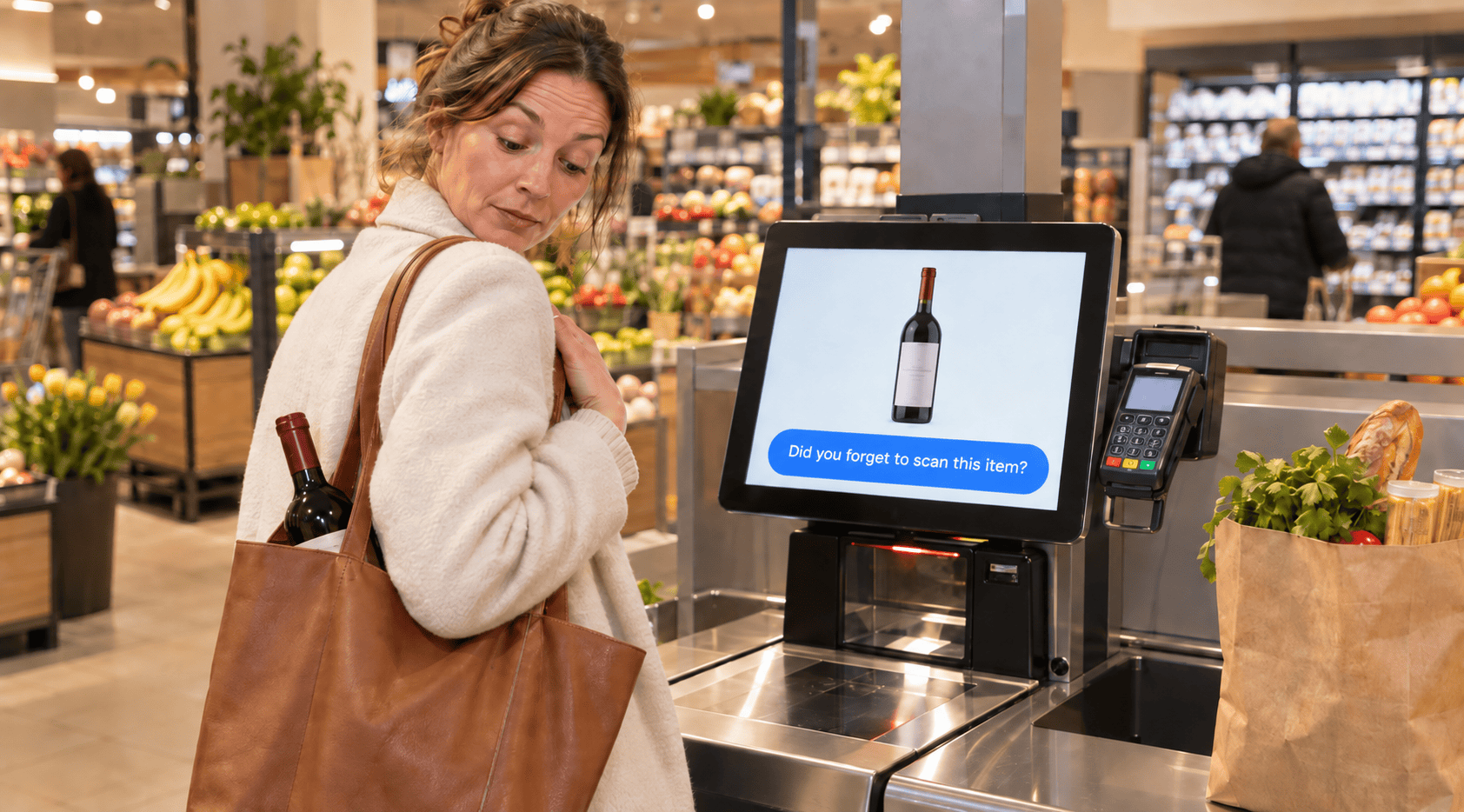
Yet any comprehensive loss prevention discussion must acknowledge unintentional shrink. Honest mistakes happen: shoppers place items in reusable bags and forget them, become distracted by phone calls during checkout, or simply overlook scanning certain products. When forgotten merchandise remains visible, staff can offer friendly reminders without creating confrontation. However, concealed items present a more delicate challenge. This is where intelligent tracking proves invaluable—a system that logs shelf interactions and correlates them with payment data provides crucial oversight. Trigo’s solution addresses this elegantly, delivering gentle on-screen prompts to customers who have inadvertently forgotten to pay for items, preserving both store revenue and customer dignity.
“The retailers winning in five years won’t rely on physical barriers or SCO attendants constantly monitoring every transaction—they’ll leverage computer vision and data intelligence to continuously refine their operations, intervening only when there’s genuine need,” says Yariv Hauer, Trigo’s Chief of Product and Delivery.
The Integrated Approach
As retailers evaluate their security strategies, the math becomes increasingly clear. Traditional approaches force a zero-sum choice: accept shrink or accept customer friction. But AI-powered solutions rewrite this equation entirely. As AI-powered systems like Trigo’s mature, the retail industry is approaching a paradigm where security becomes ambient intelligence—omnipresent yet unobtrusive. The stores of tomorrow won’t choose between security and customer experience; they’ll achieve both through technology that works silently in the background, intervening only when necessary. In this future, the question isn’t whether to implement advanced security measures, but rather how quickly retailers can adapt to a landscape where those without intelligent systems will find themselves increasingly at a competitive disadvantage—losing both inventory to theft and customers to friction.
Sources:
- https://www.flocksafety.com/blog/how-to-prevent-shoplifting-in-supermarkets
- https://www.carpentertechnology.com/blog/retail-theft-detection-devices-and-the-alloys
- https://www.forbes.com/sites/rogerdooley/2023/11/26/locked-cases-arent-the-answer-to-retail-theft-and-shoplifting/
- https://www.insideedition.com/how-long-can-it-take-to-grab-some-locked-up-everyday-items-at-big-chain-stores-84295
- https://www.dailydot.com/news/walmart-shopper-shatters-lock-case/?utm_source=chatgpt.com
- https://www.securitycameraking.com/securitynews/in-store-security-cameras/?srsltid=AfmBOooe5KgU10_lotLAj7vmwyHcaQ1xc0c9zPLoTC00BUc0Dq2bYK6z