Executive Summary
The Problem: 80% of high-risk retail theft is concealed at the shelf, hidden under clothing, slipped into bags, or stuffed inside other products, making it invisible to traditional checkout-focused security systems. While retailers have invested billions in monitoring transactions, the majority of this high-risk theft walks out the door before checkout ever sees it.
The Reality: Not all AI loss prevention systems can see this hidden 80%. The critical differences lie in fundamental design choices that determine what the technology actually tracks, where it watches, and how it responds.
Beyond detection, effective systems must deliver actionable intelligence to your team, routing the right evidence to the right person at the right time, filtering noise from critical alerts, and enabling configurable interventions that match your store policies and risk tolerance. Detection without intelligent response is just data; operational effectiveness requires systems designed to turn insights into action.
This Guide: Provides a framework for evaluating AI-powered loss prevention systems by examining six critical design choices:
- Does your AI track actions or products? Systems that only watch checkout behavior miss concealed theft entirely. Product-tracking systems like Trigo follow items from shelf to exit.
- Does it watch only checkout, or the full store journey? Checkout-only monitoring misses the context. Full-store visibility reveals what actually happened, enabling a more intelligent response.
- Does the data enable tailored responses? One-size-fits-all systems force you to treat every incident the same. Trigo provides deep context, including item count, category, and concealment status, empowering retailers to deploy the most appropriate response for each scenario.
- How does the system alert your team? Alert overload drowns staff in noise. Trigo ensures the right data reaches the right people via multiple channels (Web dashboard, mobile push, API, or offline methods), turning detection into effective action.
- Does it use facial recognition, and what does that cost? Face-based identity brings regulatory risk, bias, and liability. Privacy-first alternatives catch the same theft without introducing unnecessary bias.
- Where was the AI originally trained? Purpose-built loss prevention systems learn to detect suspicious patterns. AI trained on autonomous checkout learns to track every product flawlessly, a foundation that makes Trigo’s loss prevention technology more accurate.
The Bottom Line: Your existing cameras can see the hidden 80%, but only if the AI was built to track products, not just behaviors. The design choices outlined in this guide determine whether you reclaim that loss or let it walk out the door.
For years, retailers have fought retail theft with their eyes fixed on the wrong battleground. While billions have been invested in checkout monitoring, receipt verification, and post-incident analysis, new research reveals a staggering reality: 80% of high-risk products targeted by thieves never appear at checkout in plain view. They’re concealed the moment they leave the shelf, hidden under clothing, slipped into bags, and walked through checkout (where shoplifters often pay for a few other small items) and then out the door while traditional security systems remain blind to the theft occurring right in front of them.
This guide is about reclaiming that 80%, but not all AI solutions are created equal. While many computer vision systems claim to detect theft, the critical differences lie in how they’re designed, what they track, and when they intervene. This guide will walk you through the key aspects of AI-powered loss prevention systems, from shelf-level tracking to real-time alerting, from high-risk item identification to concealment detection, so you can understand the choices computer vision companies make and why those choices matter. When it comes to recovering that hidden 80% of theft, the difference between systems that sound similar on paper can mean the difference between reclaiming all of it, part of it, or none at all.
Design Choice #1: Does Your AI Track Actions or Products?
When evaluating loss prevention technology, it’s crucial to understand that detection isn’t a single capability, it’s a formula with two critical components. First: Is the AI even tuned to find the specific event you care about? Second: Can it correctly identify that event as theft? Many systems fail at the first step, making the second irrelevant.
AI-powered loss prevention systems generally take one of two fundamental approaches:
What Other Systems Do, The Operational Approach: Why Exclusively Watching Scanning Behavior Misses 80% of Theft
Some systems focus on operational behavior rather than the products themselves. They track hand movements, left to right motions that suggest a scan occurred, or monitor whether items pass over the scanner. They’re looking for the action of scanning, not what’s actually being scanned.
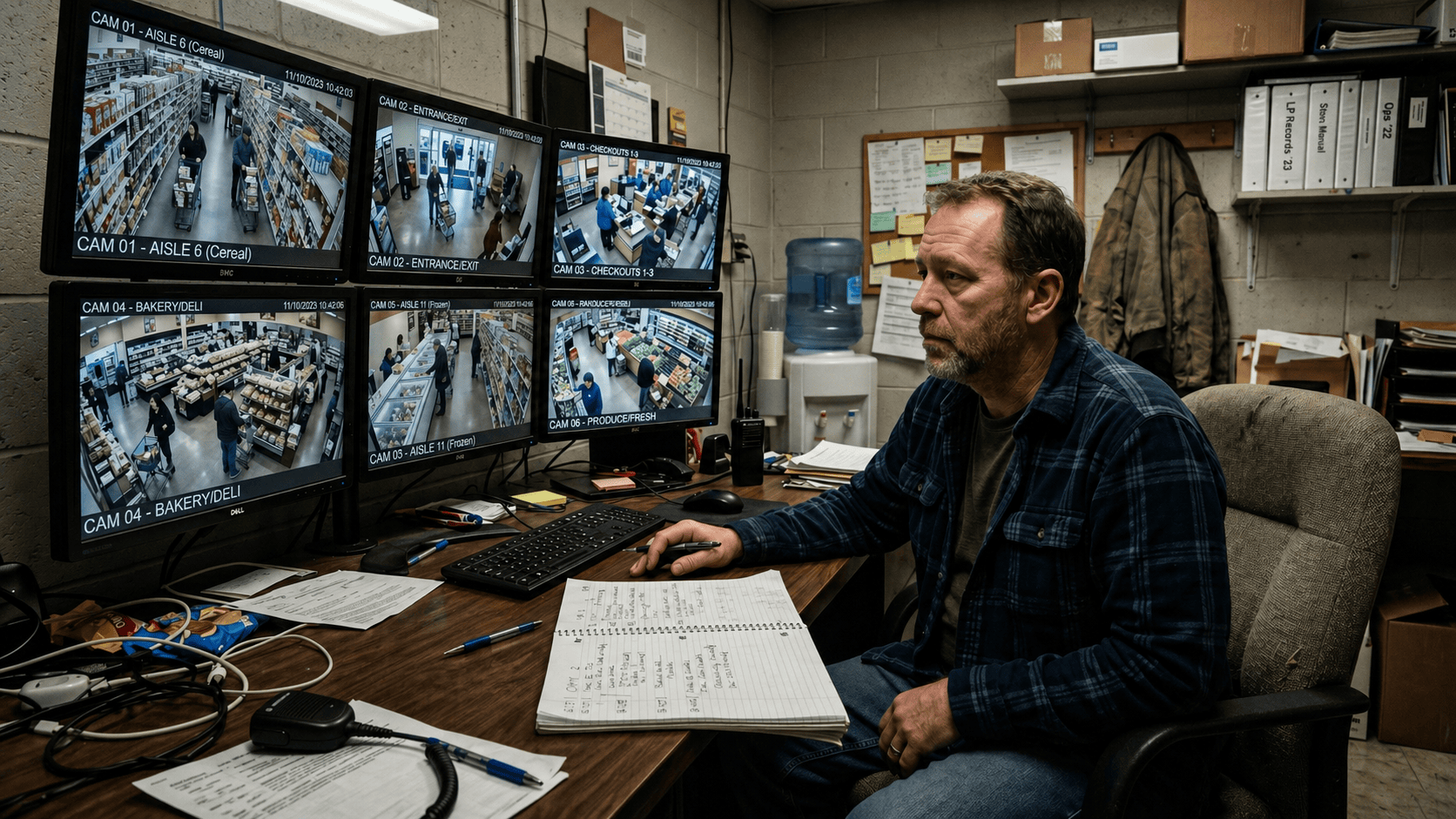
This approach has a fundamental limitation: it only works for visible theft at checkout. If someone leaves an item on the counter without scanning it, these systems can flag it. But their blind spots are significant. Because these systems focus on the act of scanning rather than the movement of the product, they miss concealed theft entirely. If someone hides an item in a bag or under their clothing before reaching the register, there is no visible checkout interaction to track, rendering the theft invisible to the system.
In practice, with such a high percentage of high-risk products getting concealed, a checkout only loss prevention system would typically not be able to detect more than 15% to 25% of total theft incidents because they can only see visible activity at the checkout. They’re optimized for the 20%, missing the concealed 80% entirely.
What Trigo Does, The Product-Tracking Approach: How Following Items From Shelf to Exit Catches What Gets Concealed
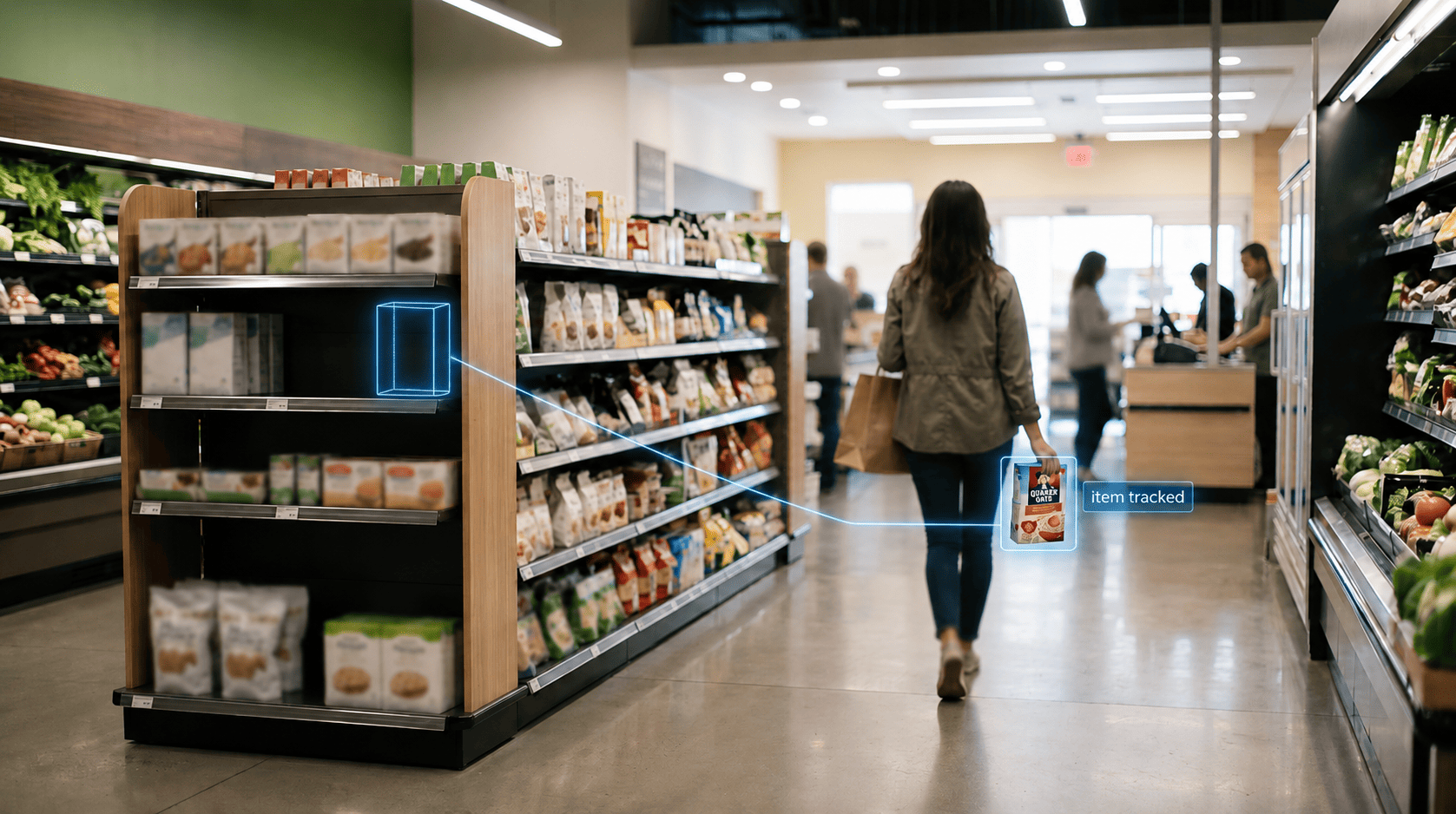
Trigo’s system takes a fundamentally different approach: we track the product’s movement and assign them to individual shoppers from the moment they leave the shelf. We know categorically what each person picked up, what they’re still carrying, and ultimately what they paid for.
This creates a complete picture that captures theft the operational approach misses entirely. Whether someone conceals items in a bag or hides them under clothing, our system knows. We’re not relying on checkout behavior, we’re tracking product accountability from the moment an item leaves the shelf, ensuring that items hidden long before the checkout zone are accounted for.
The product oriented approach creates an additional opportunity to finely tune a store’s defenses when a product is in a high risk category. A product focused system can give extra attention to specific product categories, allowing for an added security layer that operationally focused systems can’t provide. Trigo’s ‘highly stolen goods’ module is exactly how we determined that 80% of these targeted products were being concealed.
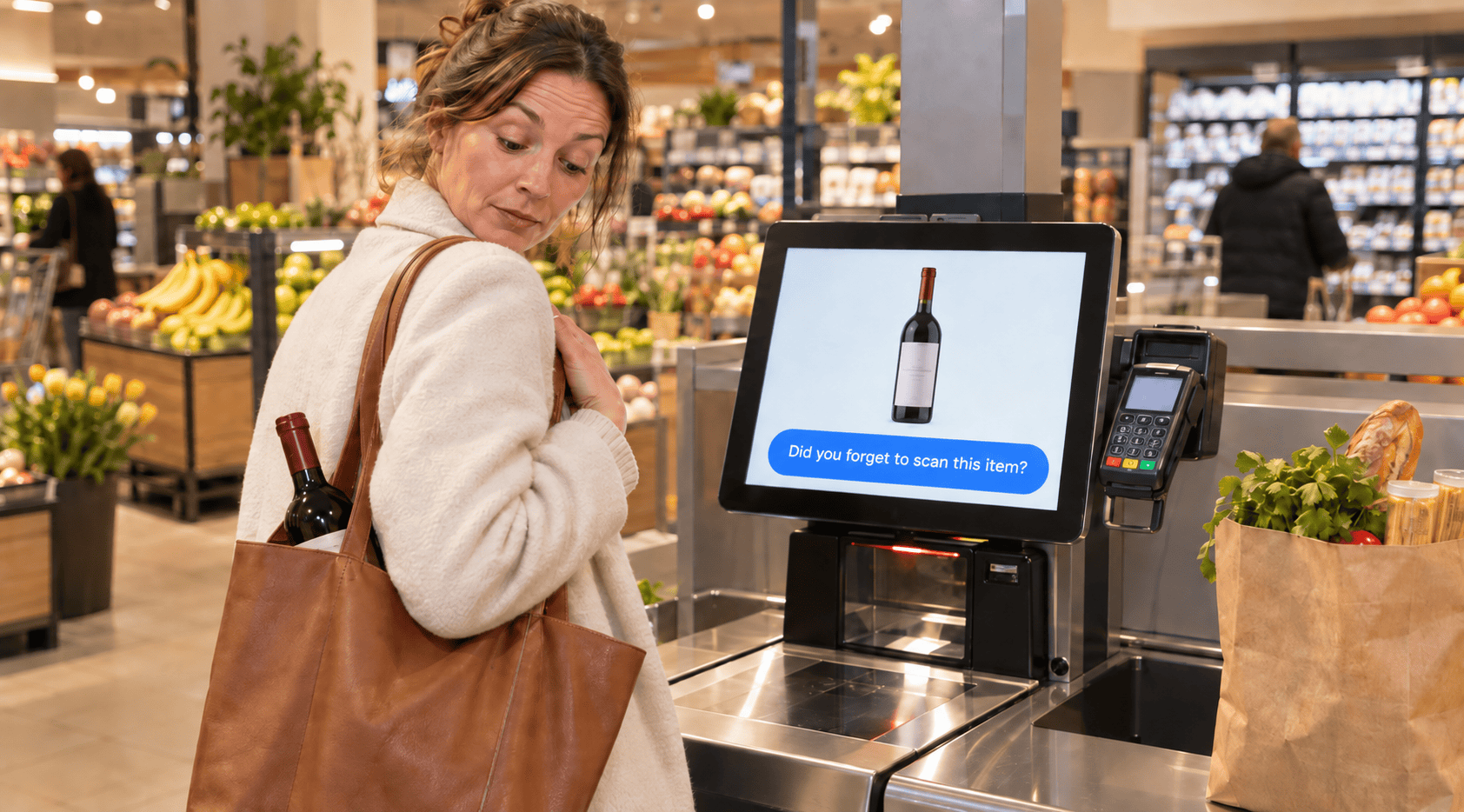
The product focused approach gives retailers critical flexibility. If someone is at checkout, and has a concealed item, which they didn’t scan, a retailer may want to take different actions depending on their store policies. Trigo provides flexibility on how to confront a shopper from a gentle nudge to a hard stop with evidence. The truth is that a high percentage of checkout-related shrink comes from forgotten products. But even when theft is intentional, giving someone the opportunity to pay, with the clear realization they’ve been caught, sends a powerful message: they should probably target a different store next time.
The bottom line: If your AI system only watches checkout behavior, you’re only seeing the 20%. To reclaim the 80%, you need technology that tracks products, anonymously tracks people, and understands the actions also.
Design Choice #2: Does Your AI Watch Only Checkout, or the Full Store Journey?
The Checkout Blind Spot: When You Miss Full-Store Context, You Miss Opportunities to Understand What Really Happened
You already know the playbook. Visible theft at checkout comes in familiar forms: covering barcodes with fingers or stickers, swapping expensive item codes for cheaper ones, the classic “scan one, bag two” move, or simply leaving items in the cart or on the counter. Concealed theft is equally well-rehearsed: products stuffed inside other products, items slipped into reusable bags before checkout, merchandise buried in pockets or under clothing.
But here’s what’s less obvious: where your AI system watches determines not just what it sees, but what it understands.
The Power of Full-Store Context: How Tracking Shelf-to-Exit Reveals What Actually Happened
Many computer vision systems, even product-focused ones, only monitor checkout zones. They’re waiting for theft to reveal itself at the moment of transaction. Trigo takes a different approach: we integrate with your existing CCTV cameras to track products across full-store interactions, shelf activity, self-checkout, manned registers, and exit points. We’re not asking you to rip out your infrastructure and start over. We’re adding a brain to the cameras you already have.
This isn’t just about watching more places, it’s about giving the AI the context it needs to understand what’s actually happening.
Design Choice #3: Can You Configure Responses Based on What Was Taken?
What Other Systems Do: One-Size-Fits-All Systems Treat Every Incident the Same, Regardless of Value or Risk
Systems that lack product-level tracking have no choice but to treat every unscanned item identically. Without knowing what’s actually involved in an incident, they can’t distinguish between a forgotten apple and a concealed bottle of premium liquor. This creates an impossible dilemma: set sensitivity too high and overwhelm staff with low-value alerts, or set it too low and miss the high-value theft that’s actually hurting your bottom line. Either way, you’re forced into a single intervention approach that’s either too aggressive for minor incidents or too lenient for serious ones.
Configurable Systems Like Trigo Let You Match Response to Risk: Hard Stops for High-Value, Soft Nudges for Mistakes
Because Trigo takes a product focused approach, not just that something suspicious happened, we can prioritize alerts based on product categories.* Remember that “Highly Stolen Goods” module that uncovered the concealed 80%? That same capability lays the groundwork for us to enable different intervention policies, depending on what’s happening.
Trigo enables different interventions at self-checkout:
- Soft Nudge: The customer receives a notification that they may not have scanned everything, but they can continue with their transaction. This works well for lower-risk items or when you want to give honest customers a chance to self-correct without embarrassment.
- Medium Intervention: The customer is presented with a choice, try to self-correct the issue or call an associate for help. This creates a moment of accountability while still allowing them to resolve it independently.
- Hard Stop: An associate must intervene before the transaction can proceed. This is your “must verify” scenario for high-risk products where the stakes are too high to rely on self-correction.
The key advantage: a system with this context can be designed to configure these responses by product category. High-value electronics or frequently stolen cosmetics? Hard stop. Produce that might have been genuinely forgotten in the cart? Soft nudge. Your laundry detergent that’s walking out the door concealed at an alarming rate? You decide the intervention level that matches your shrink data.
Systems that only monitor checkout behavior can’t offer this granularity. They don’t know if the unscanned item is a $2 candy bar or a $200 bottle of cognac. They can’t distinguish between your top-ten shrink items and everything else. Without product-level context from shelf to exit, every incident looks the same, so every response has to be the same.
Design Choice #4: How Does the System Alert Your Team?
Alert Overload: When Every Flag Looks the Same, Your Staff Can’t Prioritize, Or Drowns in Noise
Many loss prevention systems generate alerts without meaningful prioritization or filtering. Every potential incident, whether it’s a $2 item or a $200 item, triggers the same notification, delivered the same way, demanding the same attention. The result is predictable: either your staff becomes desensitized to the constant stream of alerts and starts ignoring them, or they spend their entire shift chasing down low-value incidents while missing the theft that actually matters. Without intelligent filtering and context, more alerts doesn’t mean better loss prevention, it just means more noise.
Intelligent Routing: How Trigo’s Smart Filtering and Evidence Delivery Turn Alerts Into Action
When Trigo detects an incident, the alert doesn’t just flash on a screen somewhere, it can be displayed at the SCO, employee tablet, mobile, or even as offline reports. If someone is at self-checkout with an unscanned item, the alert can be sent directly to that machine for customer-facing intervention. Simultaneously, the same alert is pushed to staff tablets and back-office computer interfaces, complete with cropped video evidence showing exactly what happened.
This gives your team choices. Maybe the soft nudge at the kiosk is enough and the customer self-corrects. But if they don’t, your associate already has the evidence on their tablet and can make an informed decision about how to approach. They’re not walking in blind, they know what product is involved, they can see the interaction, and they can choose the right response.
But here’s what separates a smart system from an overwhelming one: control over what you see.
Trigo’s system can be designed to filter alerts, giving staff the ability to focus on what matters most. Not every incident requires immediate attention. A $3 yogurt forgotten in the cart is different from a $300 electronics item concealed in a bag. The system can be designed to surface critical alerts, your high-value, high-risk products, while allowing LP staff to review lower-priority incidents when they have capacity.
Retailers can gain control over sensitivity tuning. Every store has different policies, different tolerance levels, and different customer demographics. What works for a high-shrink urban location might create alert fatigue in a suburban store with lower theft rates. Trigo’s system allows you to dial sensitivity up or down, finding the alert threshold that matches your operational reality. This means your LP team sees incidents they can actually act on, rather than drowning in noise.
The result: Your staff isn’t chasing every alert or ignoring them because there are too many. They’re responding to the incidents that matter, armed with the evidence and context they need to make smart decisions in the moment.
Design Choice #5: Does Your AI Use Facial Recognition, And What Does That Choice Cost?”
There’s a fundamental design choice that shapes everything about how a computer vision system operates: Does it identify shoppers by their faces, or does it deliberately ignore them?
This isn’t just a privacy policy decision, it’s an architectural fork in the road that determines your system’s capabilities, risks, and long-term viability.
The Case for Facial Recognition
The argument for using facial data in loss prevention is straightforward: faces are unique, accurate, and persistent. An identity-based approach allows you to maintain a database of known offenders and flag them the moment they enter your store, before they even attempt to steal. You can track repeat offenders across visits, identify patterns in organized retail crime, and potentially intervene before merchandise leaves the shelf.
From a technical standpoint, it’s also simpler. Teaching an AI to recognize the same face across multiple camera angles is easier than re-identifying someone based on other visual cues. Facial recognition provides a reliable anchor point for tracking individuals through your store.
But here’s what that approach costs you:
- Regulatory Risk Privacy regulations like GDPR Article 9 and the EU AI Act Article 5 place significant restrictions on facial data collection in public spaces. What’s compliant today may not be tomorrow, and the regulatory trend is moving toward more restrictions, not fewer. Building your security infrastructure on facial recognition means building on potentially unstable ground.
- Data Breach Liability Every stored facial image is a potential incident waiting to happen. When you’re collecting and storing biometric data on thousands of customers daily, you’re not just protecting shrink data, you’re protecting highly sensitive personal information. A breach doesn’t just expose shopping patterns; it exposes people’s identities. The liability is fundamentally different.
- The “Bad Stop” Problem Facial recognition isn’t perfect. False matches happen, and when they do, you’re not just catching an innocent person in your security net, you’re accusing them based on their face. That’s a customer service disaster and a potential legal nightmare. The cost of a false positive isn’t just a missed sale; it’s reputational damage and possible discrimination claims.
- Algorithmic Bias by Design Here’s the less obvious problem: when your AI uses facial features for identification, it will develop biases based on those features. Vision datasets are often skewed toward specific demographics, skin tones, and facial characteristics. Your system may become more accurate for some groups and less accurate for others, not because of intentional bias, but because that’s how the model learned to identify people. And you may not even realize it’s happening until it becomes a problem.
The Privacy-First Alternative
Trigo made a deliberate choice to build our system without facial identification. Incoming video frames are processed on edge devices where faces are blurred, they never enter our tracking algorithms and they’re never stored. Instead, we use anonymous identifiers to differentiate shoppers while they’re in the store.
Does this make tracking harder? Yes. Re-identifying the same person across multiple camera views without facial data requires sophisticated engineering. You need to use other visual cues, body pose, clothing, movement patterns, spatial positioning across multiple camera feeds, to maintain continuity as someone moves through your store.
Today, our technology is deployed with 4 of the top 5 European grocers, processing millions of shopping journeys across thousands of cameras, proving that privacy-first tracking works at the scale and complexity of real-world retail.
But here’s what you gain:
- Bias elimination by design: When the model never sees a face, it cannot develop facial bias. It can’t over-index on skin tone, age, gender, or any demographic markers. Every shopper is treated as a unique pattern of movement, not a demographic profile.
- Zero identity liability: You’re not collecting or storing biometric data. A data breach exposes shopping behavior patterns, not personal identities. The regulatory and legal risk profile is fundamentally different.
- No “bad stop” scenarios based on mistaken identity: Our system doesn’t flag someone because they look like a known offender. It flags behavior and product accountability. If we alert your team, it’s because unpaid merchandise is leaving your store, not because someone’s face matched a database.
- Future-proof compliance: As privacy regulations tighten, you’re already ahead of the curve rather than scrambling to retrofit your infrastructure.
If your primary goal is identifying repeat offenders before they act, facial recognition has clear advantages. But it comes with significant trade-offs: regulatory uncertainty, data breach liability, potential bias issues, and the risk of falsely accusing innocent customers.
If your goal is detecting and preventing theft based on actual behavior and product accountability, regardless of who the person is, a privacy-first approach delivers the same loss prevention outcomes without the baggage.
At Trigo, we believe you can catch the thief without compromising the privacy of honest shoppers in your store. The engineering is harder, but the long-term benefits, regulatory compliance, customer trust, and eliminated bias, are worth it.
Design Choice #6: Where Was the AI Originally Trained?
Purpose-Built Loss Prevention: Systems Trained to Detect Suspicious Behavior at Checkout
Most loss prevention AI systems are built specifically to detect theft, they’re trained on datasets of suspicious behaviors, checkout anomalies, and known theft patterns. This seems logical: if you want to catch thieves, train your AI on theft. But this approach has a fundamental limitation: the AI only learns to recognize the patterns it was explicitly trained to see. It becomes very good at spotting known theft behaviors at checkout, but it never developed the deeper capability to track every product through every interaction. It’s watching for red flags rather than maintaining a complete picture of product accountability.
The Autonomous Checkout Foundation: Why AI Trained for Zero-Error Product Tracking Sees More, More Accurately
Trigo didn’t start by building a loss prevention system. We started by building something far more demanding: EasyOut®, our autonomous checkout platform. We built stores where customers could walk in, pick up products, and walk out, with the system charging them accurately for everything they took, without any scanning, without any checkout process, and without any mistakes.
Think about what that requires. The AI had to track every shopper anonymously through a crowded store. It had to understand every shelf interaction, distinguishing between a product being picked up, examined, and returned versus being picked up and kept. It had to maintain accuracy when shoppers changed their appearance mid-visit by removing jackets or hats. It had to work with partial visibility, overlapping camera views, and the chaos of real-world retail where nothing is controlled and everything is messy.
And it had to be right every single time. In autonomous checkout, you can’t afford false positives or false negatives. Charge someone for something they put back, and you’ve destroyed the customer experience. Miss something they took, and you’ve lost money. The margin for error is essentially zero.
That’s the foundation our loss prevention AI is built on. We trained our models to solve the harder problem first.
When other companies are building systems that simply monitor checkout behavior or flag suspicious movements, we’re applying AI that was already trained to track products with autonomous-checkout-level precision. Our neural networks learned in the wild, in actual stores with actual shoppers creating actual chaos. They learned to handle appearance changes, sparse camera coverage, blurry footage, and crowded conditions because they had to. There was no other way to make autonomous checkout work.
This is why two systems that claim similar features on a spec sheet can perform completely differently in practice.
The difference isn’t just about features, it’s about how those features connect. Our system doesn’t just record motion; it leverages our autonomous stores experience to accurately link shelf interactions and anonymous shopper tracking directly to till pairing, giving the system the situational awareness needed to distinguish between a purchase, a return to shelf, and potential loss.
The Bottom Line: Design Choices Determine What You Actually Catch
Retail theft isn’t going away. But neither is the 80% of concealed, high-value theft that traditional systems miss entirely. The question isn’t whether AI can help you address loss prevention, it’s whether the AI you choose was built to see what actually matters.
At Trigo, we’ve spent years building the technology to digitize physical retail spaces with autonomous-checkout-level accuracy. Now we’re applying that same AI capability to help you reclaim the losses you didn’t even know you could prevent.
The cameras are already in your store. The theft is already happening. The only question left is: are you ready to see what you’ve been missing?
Curious how much more value lies hidden in your existing store setup?
Schedule a demo and discover what Trigo’s AI can unlock in your retail operations.