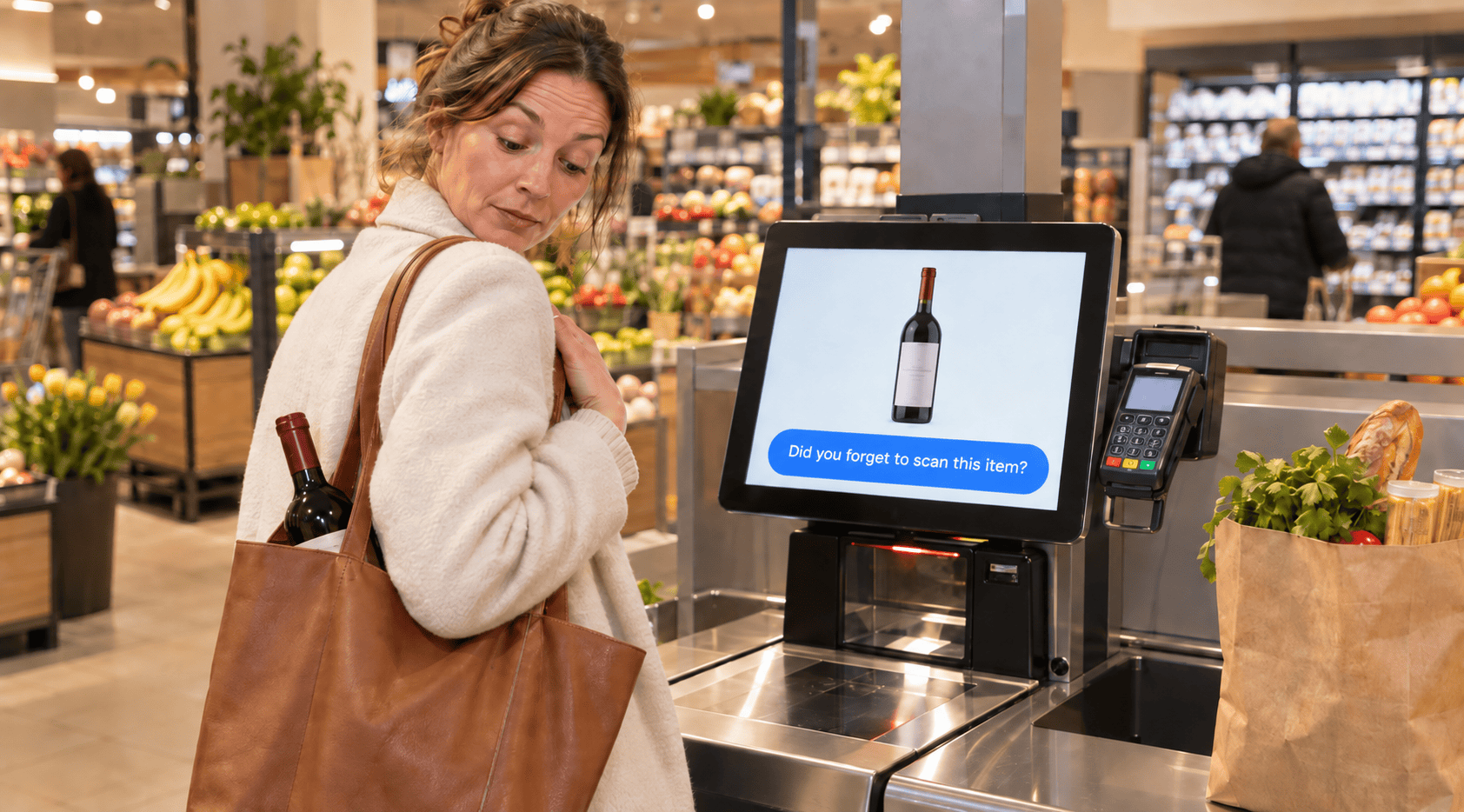

After watching a shopper crack an energy drink, toss the can inside the store, then grab a high-value item and stuff it into their pants, one thing AP staff will tell you: not all theft is subtle.
And when it comes time to make a stop, asset protection has to be ready for anything, sometimes even distractions (like a fake panic attack) or attempted theft that turns violent.
But in spite of these more overt cases, human ingenuity has produced subtle tactics ranging from resealing a bag of pet food with a portable heat sealer (with unpaid items hidden inside) to employees pocketing a few items off camera here and there.
With theft at an all-time high, it’s a good moment to step back and review the main sources of retail shrink, and the practical ways to prevent them, including how computer vision can change the rules of the game.
Intentional Theft at Self-Checkout
This is still the most likely avenue of front-end shrink in a store.
Common Tactics: Nesting, Fake Barcodes, and Skip Scanning
Intentional methods include nesting, where a shoplifter hides an item inside something else like a trashcan, or using a high-quality fake barcode to trick the register into identifying the product as something cheaper.
At Self Checkout stations, it’s also common for people to skip items in plain sight, whether on the counter or bottom of the basket. A typical variation on this is running multiple products across the scanner while only scanning one or two and intentionally skipping others.
Alerting Checkout Attendants Offers a Less Confrontational Approach
One common way to handle nesting: asset protection identifies the behavior and notifies the checkout attendants to watch for it. This avoids a direct confrontation when the shoplifter finally tries to pay for a cheaper item without scanning what’s hidden inside. Past experience shows that very often if the expensive item is uncovered at checkout, the thief will just leave or possibly pay for it.
EAS Tag Removal Is a Natural Checkpoint for Barcode Swaps
If a more expensive item has an EAS tag that needs to be disabled, training store staff to verify the item rings up correctly can get ahead of barcode swapping.
Traditional Checkout Monitoring Systems Watch for Movement, Product Tracking Watches for What’s Actually Scanned
That multi-scan trick is designed to fool systems that monitor for left-to-right movement at a traditional self-checkout. Trigo’s computer vision follows the product’s full-store journey, not the physical action of the shopper, making it more effective at determining when items aren’t scanned.
80% of Highly Stolen Goods Are Concealed Before Reaching Checkout
Beyond self-checkout skip-scan tricks, shoppers commonly conceal high-value items before they ever reach the register. These can be difficult to spot even on traditional checkout monitoring systems that use cameras to look for visual evidence of unscanned merchandise.
Trigo’s own study of 1,000 verified theft cases confirmed this, 80% were concealed in-aisle beforehand. Trigo’s system follows the product from the shelf to the exit, which enabled its computer vision technology to identify the hidden products even before reaching checkout. Because Trigo sends LP personnel real-time alerts when this occurs, it quickly helped reduce loss in deployed stores.
Handling Accidental Shrink
It happens. People forget to scan something.
Unfortunately, the most common reaction when someone realizes they made it out without paying? They don’t go back. That’s assuming they even notice in the first place.
Big Purchases Make Small Items Easy to Miss
Bigger purchases are prime territory. When someone is scanning a full cart, small items get overlooked. And since not every product has an EAS tag, the whole bundle can get pushed out without triggering any response from the store.
Traditional Cameras Don’t Always Catch Missed Scans
These items don’t always show up on camera at checkout. Sometimes they do, because the person actually attempted to scan, but the machine didn’t pick it up. Trigo’s multi-layer approach to checkout protection means that while watching product journeys the system is also verifying each scan in parallel and checking to ensure it is done correctly.
Product Tracking Flags Unpaid Items Before Customers Leave
A product tracking approach means the system knows who is carrying what. If the checkout interaction doesn’t true up at the end of scanning, the system provides an intervention per the retailer’s policies.
Loyal Customers Often Feel Entitled to Keep the “Freebie”
This is a huge area of shrink for stores.
Some retail executives have even commented that customers who frequently shop at a store feel entitled, like that one missed scan is a reward for loyalty. The store owes them. So they don’t feel obligated to fix the error.
Dealing with Employee Theft and Manned Tills
Self-checkout isn’t the only culprit. Manned tills can be a significant source of loss, and it’s often driven by employees themselves.
For loss prevention professionals, this is tricky territory.
Some Asset Protection Pros Build Relationships, Employees Often Snitch on Each Other
Some Loss Prevention professionals prefer building relationships with staff, staying plugged into what’s happening on the floor. The reality? While employees often cover for one another, this loyalty usually breaks under pressure. This is especially true if you can build a case against one thief, they will often fess up to seeing others participating also.
Rule-Breakers in One Area Are Often Rule-Breakers in Others
Others take a more subtle route: psychological profiling. The idea is simple, look at how employees treat other policies. A general disregard for rules can signal someone worth watching more closely.
Another straightforward tactic: shift watching. Observing what employees carry out when they leave can reveal a lot.
Sweethearting and Till Skimming Remain Common Tactics
- Sweethearting: A cashier conveniently “forgets” to scan items for friends at the register.
- Till Skimming: Taking extra change from the drawer and pocketing the difference.
Product Tracking Sends Real-Time Alerts When Items Leave Unpaid
Computer vision is a great way to deal with this as well. When your system tracks products throughout the store, catching unpaid items becomes far easier.
Trigo’s approach: track all shoppers anonymously while detecting when someone picks up an item and leaves without paying. The result? Real-time alerts sent directly to LP, no guesswork required.
Is Your Loss Prevention Strategy Ready for the Next Wave of Shrink?
Whether it’s a loyal customer who genuinely forgot to scan a water case or a sophisticated shoplifter swapping barcodes, shrink eats away at your bottom line every single day. You don’t have to choose between aggressive security measures and a seamless customer experience.
With Trigo, you benefit from a sophisticated physical AI capable of digital tracking across your existing CCTV and providing real-time alerts and actionable interventions all according to your store’s policy needs.
Discover how computer vision is rewriting the rules of asset protection here.